

Year One as an Alignable Silicon Valley Ambassador: What Kimberly Ocampo-Shah Built (and What Comes Next)
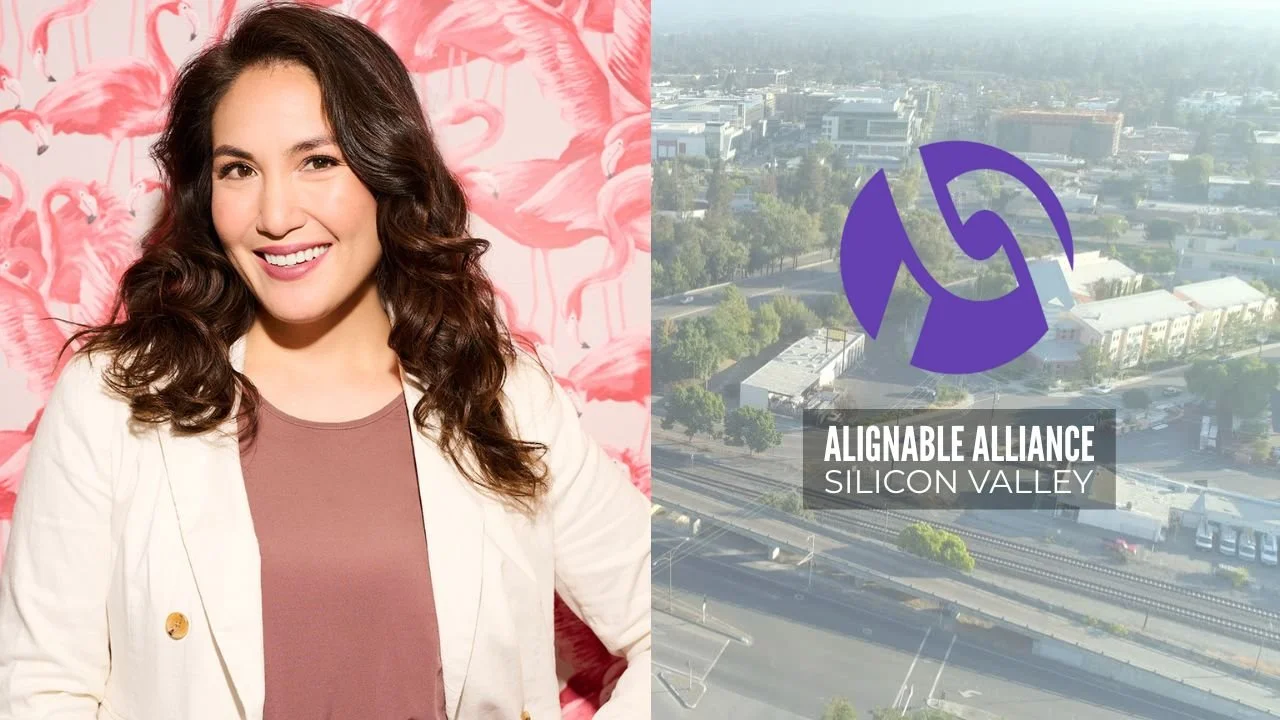
Over the past year, Kimberly Ocampo-Shah has reflected on what it truly means to serve as an Alignable Silicon Valley Ambassador—and what it takes to build a consistent space for small business connection in the Bay Area.
To start, the Ambassador role is often misunderstood, so a little context helps. It’s a volunteer leadership position, and it comes with real expectations: vetting, training, and the ongoing work of showing up—hosting events, gathering feedback from local owners, and helping strengthen the small business ecosystem. And because there’s no budget or built-in team behind it, progress depends on the same things any community depends on: relationships, consistency, and trust.
Alignable isn’t LinkedIn (and that’s the point)
A quick clarification: Alignable serves a different purpose than LinkedIn. It’s built to support small business relationships that translate into real-world connections.
That matters to Kimberly. She was born and raised in Silicon Valley, and she’s also wired as a creative—so she’s always cared about bridging those worlds: innovation with humanity, technology with community.
In Silicon Valley, the dominant narrative is often driven by big tech. However, the everyday small businesses—the ones on main streets, in neighborhoods, and behind so many family stories—are part of what makes the region feel like home.
That’s why Kimberly’s goal as an Ambassador has been to widen the story by creating a space where diverse business owners can connect and learn from each other: solopreneurs, creatives, tradespeople, service providers, and community builders.
What the Ambassador role actually asks of you
Over the past year, one of Kimberly’s biggest takeaways has been this: being an Ambassador goes far beyond hosting a networking event. It’s community leadership, and it requires presence.
In practice, that includes:
Creating a consistent gathering point people can trust
Welcoming newcomers so they don’t feel like outsiders
Encouraging relationship-building over pitching
Listening closely to what local business owners are actually navigating
Iterating in real time based on feedback and lived experience
Just as importantly, it means holding the energy in the room—making sure the quiet person gets included, the first-timer doesn’t leave feeling invisible, and the event doesn’t become a sea of sales-y monologues.
Business cards are easy to collect. Real relationships take intention. Those are the connections that grow into referrals, collaborations, friendships, and long-term community.
The biggest challenges: home base, consistency, and trust
Like any first year, this one came with friction. One of the biggest challenges was finding a true home base: a consistent venue partner and a repeatable monthly format to build around.
The vision was clear—bring the community together, build an audience, and create a space where local owners feel seen. Still, trust takes time, especially when the results aren’t visible yet.
Early on, Kimberly was asking venues to collaborate before there was proof. And since Alignable is still widely unknown as a brand in Silicon Valley, an in-person networking event under that banner was unfamiliar to many. As a result, venues understandably wanted deposits and budgets—and Kimberly often had to explain, “I’m a volunteer.”
At times, it felt like building the plane while flying it.
Along the way, there was also a practical lesson inside that challenge: when a community event is built from scratch, logistics can feel like the least glamorous part of leadership. Yet they matter. A consistent location, a consistent date, and a consistent experience are what help people trust the event enough to keep showing up.
What evolved: The Business Mingle
Over time, Kimberly’s events evolved into what she now calls The Business Mingle—a mixer-style gathering designed to help people connect freely and naturally.
The format is intentionally light on structure and built for a short timeframe, because the best conversations often happen when people can simply mix and mingle without feeling managed.
Kimberly established one guiding rule early: make real connections, and don’t lead with your business card. That principle shaped the culture from the start. Alignable is relationship-first, built on the know-like-trust foundation, and that’s the same approach she brings to community-building.
As the Business Mingle grew, it expanded to include themes, raffle sponsors, and occasional guest speakers. Even so, the heart of it stayed the same: connection over pitching.
At the same time, the events became more deeply intertwined with storytelling. Kimberly began incorporating the Business Mingle Spotlight into each event—a moment to highlight someone’s story—because stories are what truly connect people. They help attendees see each other as humans first, and that’s where real collaboration begins.
The one rule (and why it matters)
“Don’t lead with your business card” protects the tone of the room.
When people open with a title, the conversation can turn transactional fast. Curiosity changes that. A simple question creates room for common ground. And when someone shares the real reason they started—what they care about, what they’re building—trust forms naturally.
That’s also why Alignable’s relationship-first approach matters. It rewards authenticity. It creates room for real connection. And it makes space for people who don’t want to be the loudest voice in the room—just the most genuine.
What Kimberly learned about small business community in Silicon Valley
Kimberly’s first year reinforced something important: community doesn’t happen automatically, even in a place as connected as Silicon Valley.
People are busy. Many owners are carrying a lot. And when something new is being built, it takes time for others to understand what it is, who it’s for, and whether it’s worth showing up.
And yet, the year also revealed something encouraging: when the environment is welcoming and the intention is clear, people want to connect. They want to be known beyond their elevator pitch. They want to learn from peers who are in it with them.
Over the months, Kimberly has watched solopreneurs walk in guarded and walk out lighter. She’s seen creatives meet tradespeople and realize they’re solving similar problems in different languages. She’s heard people who hate networking admit—quietly—that this felt different.
What she’s proud of (even without perfection)
Even without perfect conditions, Kimberly is proud that the community didn’t wait to begin.
She’s proud that the events evolved instead of staying rigid.
She’s proud that the culture stayed relationship-first.
And she’s proud that storytelling didn’t become a marketing tactic, but stayed what it’s always been: the fastest way to help people feel seen.
Proof: the beginning and the evolution
For those who like to see the receipts, here’s the starting point and the evolution:
Original Alignable Ambassador application video: https://youtu.be/TtpAC17Fw2s?si=EsnXNu8BHdt0RdFo
Business Mingle playlist on YouTube: https://youtube.com/playlist?list=PLidgKWO0rxuY0i7jctQzaxd_ArUpKwEJ7&si=-y7_W6PfZMtFKpp8
Gratitude (because none of this is solo)
Finally, Kimberly shares sincere gratitude to Tracey Lee Davis, the original Silicon Valley Ambassador and her Co-Ambassador. Tracey ushered her in with generosity and steady support—and without that guidance, this first year would have looked very different.
Together, they kicked off their very first in-person event for the Silicon Valley Alignable Alliance at San Pedro Square in downtown San Jose in July 2025. Kimberly credits Tracey with helping set the tone for what they’ve been building: community-first, relationship-driven, and welcoming.
Looking ahead
Year one required faith, iteration, and persistence. Now, year two is focused on strengthening what works, tightening the format, deepening partnerships, and continuing to build a space where small business owners can feel seen, supported, and connected.
If you’ve attended a Business Mingle event, thank you for being part of this story.
And if you haven’t yet, Kimberly looks forward to welcoming you at a future gathering.