

AI Isn’t the Expert—Humans Are
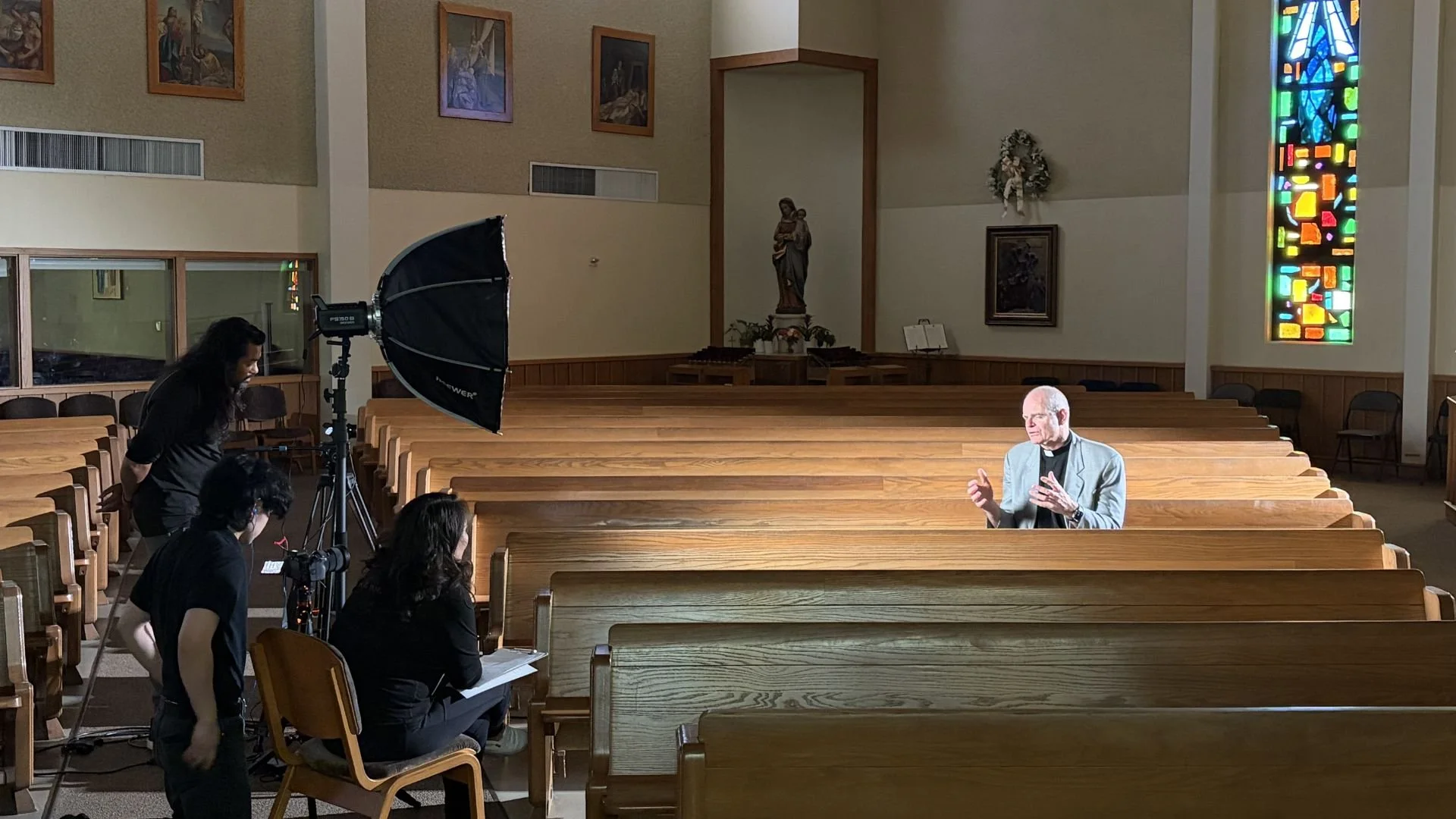
Behind-the-scenes of an interview with Fr. Brendan, discussing AI and ethics.
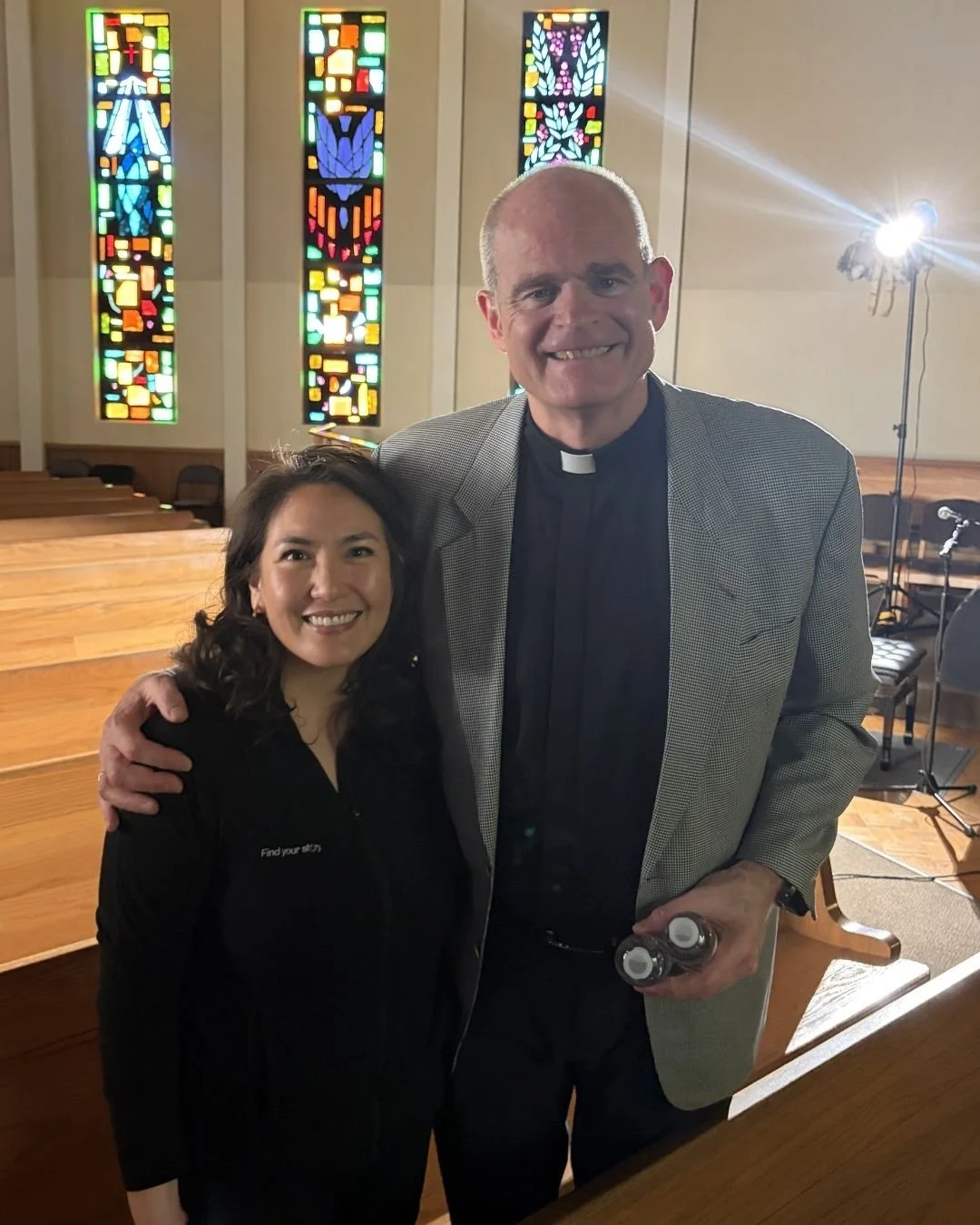
Last week, my team had the honor of interviewing Fr. Brendan McGuire again in preparation for the Vatican’s encyclical announcement.
We’ve filmed plenty of meaningful conversations over the years. But this one didn’t feel like a normal filming session.
It felt weighty. It felt urgent.
Not in a dramatic way—more like a responsibility. A reminder that the stories we tell, and the way we tell them, shape how people understand what’s true.
The line that gets crossed faster than we think
During our conversation, Fr. Brendan spoke about impersonation—and how quickly the line can get crossed when technology starts replacing what is uniquely human.
He named something that felt deeply personal:
“Our faces are unique. They’re ours. Our voice is ours.”
That sentence has stayed with me.
Because we’re living in a moment where AI can generate a lot—images, scripts, videos, even voices. You can pull up a roadmap, a prompt pack, a “play-by-play,” and convince yourself you don’t need anyone else.
But when something can mimic a person so convincingly that people can’t tell what’s real, we’re not just talking about innovation.
We’re talking about identity. We’re talking about dignity. We’re talking about consent.
When it looks polished—but doesn’t ring true
Here’s where I’ll be direct: when humans rely on AI-generated images or avatars to represent them, it can become a disservice to the real person.
It might look polished, but it doesn’t ring true—and people feel that.
And it’s not just your image.
Even in your thoughts—the way you write, the way you express yourself—people can often tell when it’s you versus a bot. When your words don’t sound like you, your audience doesn’t just question the message.
They start questioning the messenger.
Fr. Brendan also pointed to the danger of misinformation and disinformation—how easily a machine can put words into someone else’s mouth, in their exact voice, without consent.
If what we’re hearing or seeing doesn’t ring true, then how do we come to know what’s true?
The future can’t be built by outsourcing the human
That’s why I keep coming back to this: the future can’t be built by outsourcing the human.
Pope Leo frames this moment through the dignity of the human being—and I find that grounding. Because it’s easy to get swept up in what’s possible, and forget what’s right.
A plan is not the same as execution.
And access to a roadmap is not the same as the presence of an expert.
What execution actually requires
If you’re building a brand, leading a team, or serving a community right now, here’s what I believe execution actually requires:
Knowing what to emphasize—and what to leave out (strategy isn’t adding more; it’s choosing what matters)
Knowing what’s true, and what’s respectful (especially when you’re telling someone else’s story)
Taste: the difference between “content” and something that actually lands
Empathy: the ability to listen and reflect what’s real
Lived experience: being in the room, doing the work, learning from mistakes
Accountability: carrying the weight of outcomes
And it’s the vision, creativity, and unique voice behind each message that makes an impact.
Brick by brick beats instant
Pope Leo also warns against building without solid foundations. For me, that’s a direct challenge to the “instant content” mindset.
The strongest stories aren’t produced by speed alone. They’re built—brick by brick—through discovery, clarity, craft, and care.
They’re built with consistency.
Your story isn’t told in one day.
And sometimes what looks like an “overnight moment” is actually the culmination of stories you’ve been telling your whole life.
You’ve carved a path—and now you’re walking it.
A practical way to use AI without losing yourself
I’m not anti-AI. I use it.
But I don’t want it to do my thinking for me.
I want the genesis of my thoughts to come from me first.
Then, if I choose to use AI, I want it to support my workflow—not replace my voice.
Because authenticity isn’t just a marketing strategy.
It’s how trust is protected.
Closing reflection
If you’re creating, leading, or building right now, my hope is simple: that we don’t trade away what’s most human in the name of what’s most efficient.
What’s your non-negotiable when it comes to authenticity?
Learn more:
Learn more about Fr. Brendan McGuire: frbrendanmcguire.org
Watch Fr. Brendan on YouTube: @frbrendanmcguire (Produced and managed by our team at Emotional Content Productions.)